
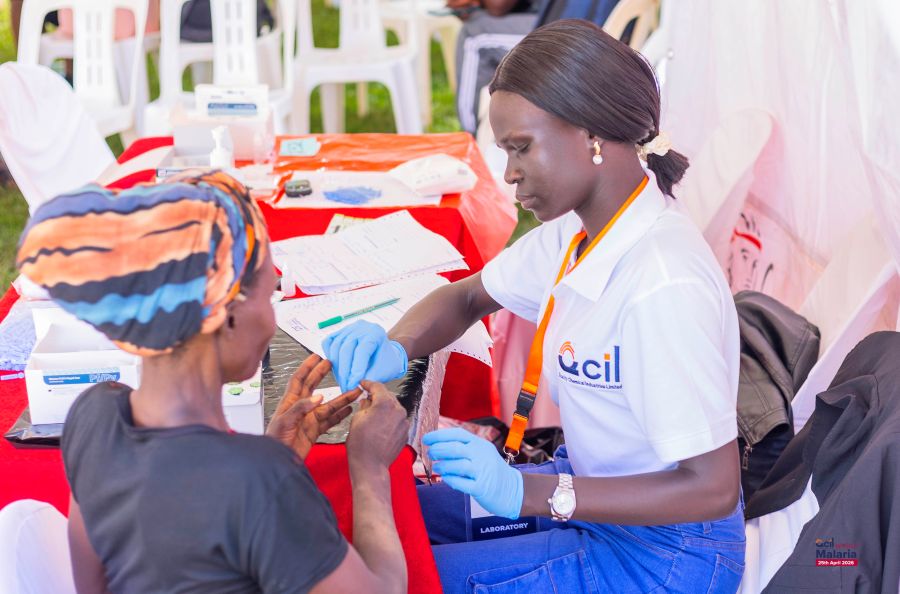
Quality Chemical Industries Limited (QCIL) and a number of its partners on Saturday stepped up efforts to combat malaria through a large-scale community medical camp at Lubaga Cathedral, marking World Malaria Day with a strong call for prevention, early treatment, and shared responsibility.
Held under the global theme “Driven to End Malaria: Now We Can. Now We Must.”, the outreach brought essential health services closer to communities, benefiting more than 1,000 people through free testing, treatment, and health education.
The camp offered malaria rapid testing and treatment, distribution of insecticide-treated mosquito nets, antenatal and pediatric care, as well as screening for diabetes, hypertension, dental, and eye conditions.
Speaking at the event, QCIL Head of Human Resources Harrison Kiggundu emphasized that despite being preventable and treatable, malaria continues to claim lives due to delayed response.
“Malaria is both preventable and treatable, yet it continues to claim far too many lives,” he said.
“There are approximately 249 million malaria cases globally, resulting in over 600,000 deaths annually. Tragically, the majority of these deaths occur among children under the age of five,” he said, citing figures from the World Health Organization.
Kiggundu warned that adults often underestimate the disease.
“As adults, we sometimes dismiss malaria as a simple fever and delay seeking treatment. Before you know it, the illness progresses—sometimes even affecting vital organs like the kidneys.”
“In Uganda, malaria disrupts education, weakens household incomes, and reduces workplace productivity—ultimately slowing national development.”
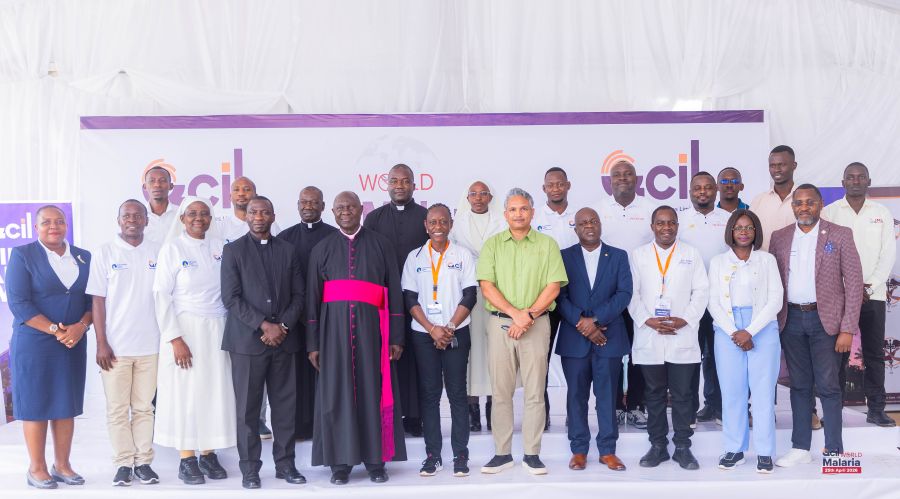
Kiggundu underscored the role played by Quality Chemicals Industries in the fight against Malaria, not only in Uganda but on the entire African continent.
“Through the local manufacturing of quality-assured antimalarial medicines, we are improving access to life-saving treatments. Producing these medicines closer to communities helps reduce supply delays and strengthens health security.”
He also spoke about the medical camp that he reflects the company’s purpose of ensuring not just treatment, but long-term well-being.
“This initiative reflects what ‘Life after well’ truly means for us—life lived well without pain and suffering through awareness, prevention, and bringing service close to where it matters the most. Our purpose as a company goes far beyond manufacturing medicines. It is about ensuring that people not only recover from illness but are empowered to live healthier, fuller lives.”
The camp offered malaria rapid testing and treatment, distribution of insecticide-treated mosquito nets, antenatal and pediatric care, as well as screening for diabetes, hypertension, dental, and eye conditions.
Sr. Grace Nanyondo of Rubaga Hospital said the disease is increasingly difficult to detect early.
“Malaria has changed its traits. Gone are the days when every fever would be counted as malaria.Nowadays, not every fever is malaria, and it hides there—ending up being discovered late,” Sr.Nanyondo said.
She cautioned against the common belief that cities are safer.
“In urban settings like ours, there is a common assumption that cities are safer, but data and our daily experience tell quite a different story.”
According to her, Kampala recorded over 680,000 malaria cases between 2020 and 2023, with some divisions reporting infection rates as high as 100 cases per 1,000 people.
“At facility level, we see the reality behind these numbers. We receive patients not only from Lubaga but surrounding divisions and beyond.As a referral hospital, we carry the weight of delayed admissions—especially among children, pregnant mothers, and working adults.”
Representing the Kampala Archdiocese, Msgr. Dr. Lawrence Ssemusu—on behalf of Archbishop Paul Ssemogerere—praised QCIL and partners for demonstrating practical compassion.
Drawing on the biblical parable of the Good Samaritan, he said:
“While others passed, he stopped. He opened his eyes and saw a wounded man. He did not turn away—he treated his wounds with care and paid for his recovery.This is the love we are called to embody—a love that is not simply convenient, but sacrificial; not distant, but deeply involved,” Msgr Dr.Ssemusu said.
He commended the initiative as a sign of generosity.
“In a time when people speak of scarcity, you have chosen generosity… you stepped out in solidarity with those who are suffering.”
Ssemusu urged sustained commitment from all sectors.
“Every mosquito net used, every case diagnosed early, every child protected brings us one step closer to ending malaria.Let us not pass by on the other side. Let us stop, let us see, let us care, and let us act.”
The outreach reinforced QCIL’s mission to expand access to healthcare built on availability, affordability, and accessibility—ensuring that no one is left behind in the fight against malaria.
